
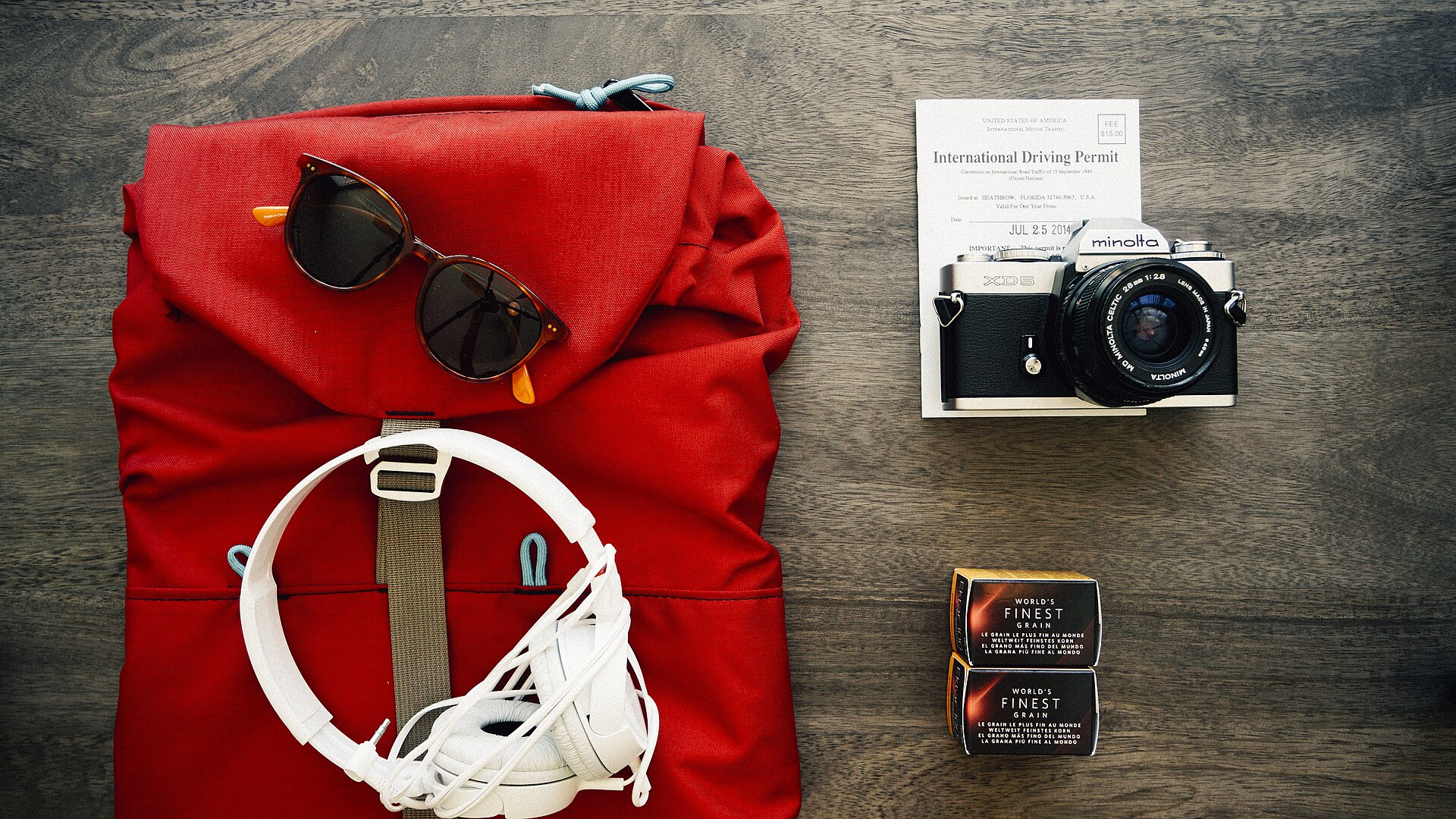
Every packing list on the internet is written before the trip. This one was written after several of them. It is what is actually in our bags after a month of moving between hostels every two or three nights along the coast—what earned its place, what got posted home, and what we bought at a market halfway through because we should have brought it in the first place.
Start with the bag, not the stuff
The single biggest decision is the size of the bag, because everything else expands to fill it. For a month of hostel hopping we settled on something in the 35 to 45 litre range, small enough to go on as cabin baggage on most budget airlines and, more importantly, small enough to lift onto a top bunk at midnight without waking six people.
A front-loading bag beats a top-loader in a dorm. You can open it flat on the bed like a suitcase instead of digging to the bottom for a sock while your bunkmate glares. Look for a hip belt that actually carries weight, a lockable main zip, and no dangling straps to catch in bus doors. Colour matters less than you think, though a bag that does not look expensive draws less attention on a luggage rack.
Alongside it, a small day bag that packs flat—something in the 10 to 20 litre range. It goes to the beach, the fort, the supermarket, and it holds the things you do not want in a locker.
The sleep kit
This is the part first-timers skip and veterans obsess over, because a bad night in a dorm ruins the next day and the one after. Our kit is small and it never leaves the bag.
- Foam earplugs, several pairs. They get lost, they get grubby, they cost almost nothing. Bring more than you think.
- A soft eye mask. Dorm curtains are decorative at best. Someone will turn the light on at three in the morning to find a charger.
- A sleeping bag liner. Not for warmth—for the nights when the sheets are questionable or the blanket is thin. It weighs about as much as a t-shirt.
- A small torch or a phone with a red-light setting. Rummaging by the light of a phone screen wakes the whole room. A dim, downward light does not.
- A hook or a short cord with a clip. Bunks rarely have anywhere to hang a bag of night things. A carabiner on the bed frame fixes that.
The bathroom kit that survives shared showers
Shared bathrooms are the great leveller. Nobody looks glamorous, and the person with a well-organised wash bag wins every morning. Ours hangs from a hook, because shelves in hostel showers are either missing or permanently wet.
Solid toiletries changed everything for us. A shampoo bar and a soap bar cannot leak, do not count as liquids at airports, and last for weeks. A quick-drying microfibre towel is non-negotiable; a proper cotton towel will still be damp when you check out and will make the whole bag smell by day three. Flip-flops for the shower are the one item every hostel guide agrees on, and for good reason.
The rest is what you would expect, kept to travel size: toothbrush, a small deodorant, sunscreen, a razor, a few plasters, painkillers, rehydration sachets and any prescription medicine in its original box. Buy the big things on the road. Every town along the coast has a pharmacy, and it will be cheaper than the airport.
Clothes: the seven-day rule
Pack for a week and wash. That is the whole rule. A month of clothes is a suitcase; a week of clothes is a small backpack, and laundry is a couple of hours every seven days, usually while you drink coffee and plan the next stop. Most hostels have a machine, and towns without one have a laundrette or a sink and a length of cord.
For a temperate coast in spring or autumn, ours looks like this: three or four t-shirts, one long-sleeve, one warm layer, one light waterproof, two pairs of trousers or one pair plus shorts, a week of underwear and socks, swimwear, one thing that is nice enough for a dinner out, and one pair of shoes you can walk all day in, plus the flip-flops. Everything in dark or mid colours that hide a stain and go with everything else.
Packing cubes are not a gimmick. One for tops, one for bottoms, one for underwear, and a small one for dirty clothes so the clean half of the bag stays clean. They also let you unpack onto a bunk in thirty seconds and repack in the dark.
The tech that earns its place
Less than you think. A phone, a charger with a long cable because the socket is never near the bed, a small power bank, a universal adaptor with more than one USB port so you can share, and a pair of cheap headphones. If you work on the road, a light laptop and a compact multi-plug so you can turn the one free socket in the common room into three. An e-reader if you read a lot; a paperback from the hostel swap shelf if you do not.
We stopped carrying a camera. The phone is good enough, and it is one less thing to lock up. We also stopped carrying a travel pillow, a travel kettle, a second pair of trainers and a hardback guidebook, all of which went home in a parcel from the first town with a post office.
The little things that make a dorm easier
- A padlock that fits both a locker hasp and the zip of your bag. Combination, not key.
- A lightweight tote bag for the supermarket and for carrying wet swimwear back from the beach.
- A spork and a small folding knife for picnics on the seafront when the kitchen is full.
- A few clothes pegs and a short length of cord. Dorms have nowhere to dry a towel.
- A water bottle with a wide mouth. Fill it in the kitchen, save money and plastic.
- A small notebook and a pen. For the wifi code, the bus times, the name of the person who told you about the cove past the fort.
What a month teaches you
The list gets shorter the longer you travel. By week three you know exactly which pocket everything lives in, you have stopped noticing the weight, and the things you miss are never things you left out. The bag becomes a small, portable version of home, and the discipline of having less turns out to be one of the quiet pleasures of hostel life. Pack light, wash often, and leave room for the thing you will find at the market.