
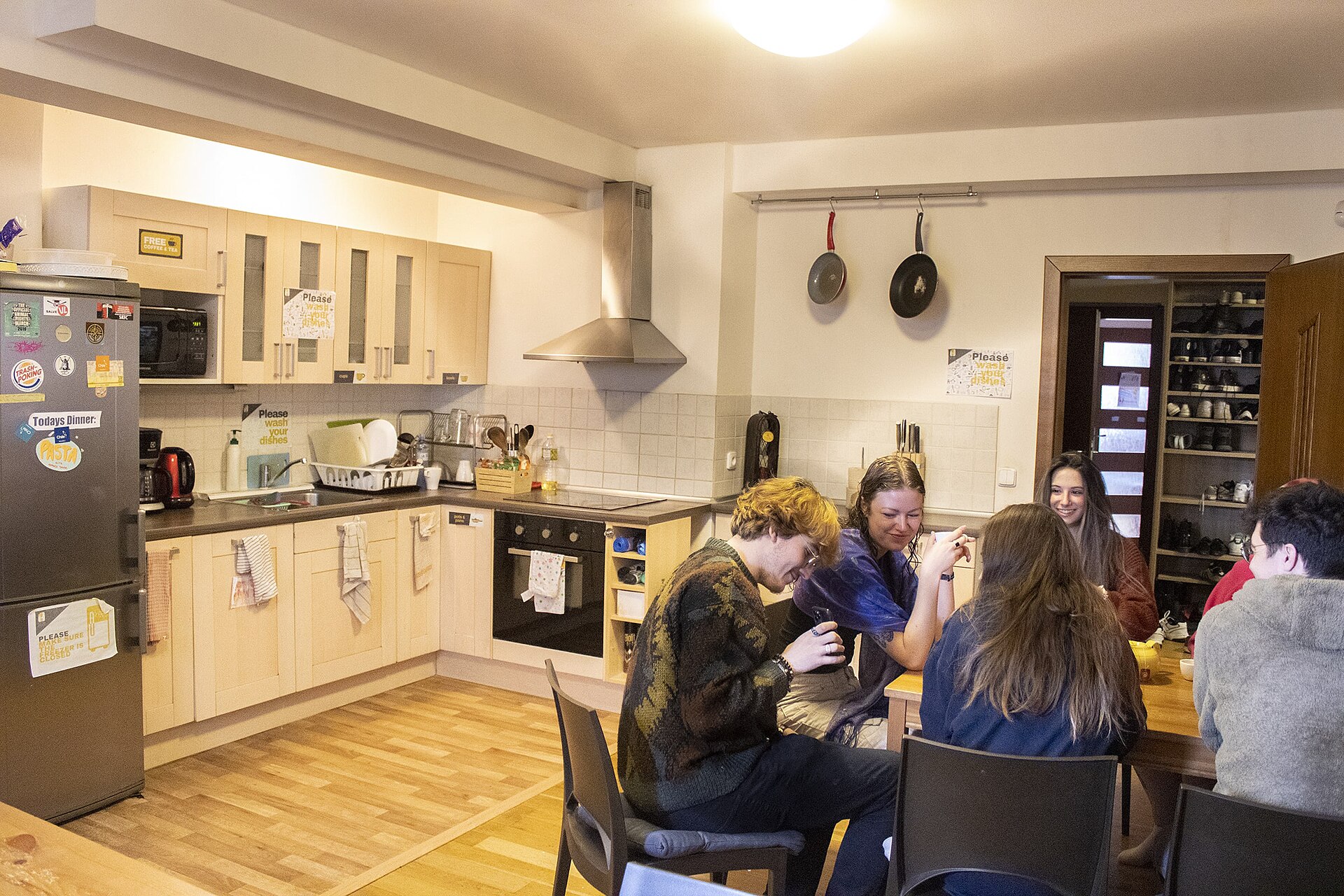
The kitchen is where a hostel shows its true character. It is also where friendships start, where budgets get rescued, and where, occasionally, someone loses their temper over a missing pan. At Red Star, the kitchen is a long room with two stoves, a battered wooden table and a fridge that has seen things. We have watched thousands of meals cooked there, and the rules that keep it a happy place are simpler than you might think. Here they are, followed by five meals that have kept our guests fed on very little for years.
The unwritten rules, written down
Every hostel kitchen has a laminated sign with rules on it. Nobody reads the sign. What actually governs the room is a set of habits that good travelers pick up and pass along.
- Clean as you go, not after: the sink is shared, the counter is shared, and the person waiting behind you needs both. Wash your knife and board while the onions soften. When you leave, the space should look like you were never there.
- Label your food, and respect labels: a strip of masking tape and a marker are usually by the fridge. Write your name and the date. Anything unlabeled is fair game in most hostels, and anything past its date gets binned during the weekly clean-out. Do not eat food with a name on it. It sounds obvious; it is broken constantly.
- Use the free shelf: almost every hostel has a shelf of things people left behind — half a bag of rice, some oil, a jar of spice. Take from it, and add to it when you leave. It is the kitchen’s circulatory system.
- Do not hog the stove: if the kitchen is busy, cook something that takes twenty minutes, not a three-hour stew. Keep the second burner free if you can.
- Offer, but do not expect: if you made too much, say so. A bowl of extra pasta has started more friendships than any icebreaker event. But do not cook expecting others to chip in.
- Dry and put away: a clean pan left wet in the rack is not finished. The next person wants it dry and on the shelf.
There is one more rule that is never on the sign: be aware of the room. If someone is clearly having a quiet moment with their coffee, do not start a party. If there is a party, do not sigh loudly about it. A kitchen holds many moods at once.
Shopping like a backpacker
Cheap cooking starts before you reach the stove. Buy at the local market or the plainest supermarket, not the convenience shop by the hostel. Buy small quantities of the things that go off and large quantities of the things that do not. A bag of rice or pasta, a bottle of oil and a few basic spices will carry you through a week, and whatever is left goes on the free shelf.
Learn the local cheap staples. In one country it is lentils, in another it is potatoes, in another it is eggs and flatbread. Cooking what the locals cook is nearly always the least expensive option, and it teaches you something about the place that a restaurant never will.
Team up when you can. Two or three people sharing a shop and a pot spend far less per head and eat far better than each cooking alone. This is how most of the memorable dinners at Red Star begin: someone says “I have onions, who has rice?”
Five meals for almost nothing
None of these need more than one pot or pan, a knife and a board. All of them can be made in a busy kitchen in under half an hour. Quantities are for one hungry person; double them and invite someone.
1. The everything-in-the-pan egg fry
Fry whatever vegetables you have — onion, pepper, a handful of spinach, a chopped tomato — in a little oil until soft. Push them to one side, crack two eggs into the pan and scramble them into the vegetables. Season, and eat with bread or fold into a flatbread. It costs pennies, it uses up leftovers, and it works for breakfast, lunch or dinner.
2. Garlic and oil pasta
Boil pasta. While it cooks, gently fry three or four cloves of sliced garlic in a generous amount of oil with a pinch of chilli if you have it. Drain the pasta, keep a splash of the water, and toss everything together. Add anything green you have, or a tin of tuna, or cheese from the free shelf. It is the oldest cheap meal in the world for a reason.
3. One-pot lentil stew
Soften an onion in oil, add a spoon of any spice going — cumin, paprika, curry powder — then a cup of red lentils, a tin of tomatoes and enough water to cover. Simmer twenty minutes, stirring now and then. Salt at the end. It makes two big bowls, it keeps overnight in the fridge, and it reheats into a better version of itself.
4. Fried rice from yesterday
Cold cooked rice is the secret ingredient; fresh rice turns to mush. Fry an onion, add whatever vegetables you have, then the rice, then a splash of soy sauce or just salt. Push it aside, scramble an egg in the gap, mix it through. This is the meal that saves the rice you cooked too much of on Tuesday.
5. The loaded potato
Prick a large potato, microwave it for eight to ten minutes or bake it if the oven is free. Split it, add butter or oil, then whatever you have: cheese, beans from a tin, leftover stew, a fried egg. It is heavy, hot and filling, and a bag of potatoes is one of the cheapest things you can buy anywhere.
What it actually costs
People ask us how much they can save by cooking. The answer depends on the country, but the pattern is the same everywhere: a home-cooked hostel dinner typically costs a fraction of even a cheap restaurant meal, and over a week of travel the difference is often a night or two of accommodation. Cook three or four dinners a week, eat out the rest, and you get both the savings and the local food experience.
The real return is not only financial. The kitchen is where you meet people without trying. Someone will ask what you are making. Someone will offer a lemon. By the time the food is ready, you are eating with company you did not have an hour ago.
Leave it better than you found it
The kitchen belongs to everyone who passes through, which means it belongs to no one and needs all of us to look after it. Wash up. Wipe down. Label your food. Put the good things you cannot carry on the free shelf. Be the person the next traveler is glad to have followed. At Red Star, the best kitchens we have ever seen were not the ones with the fanciest equipment; they were the ones where every guest quietly did their part.