
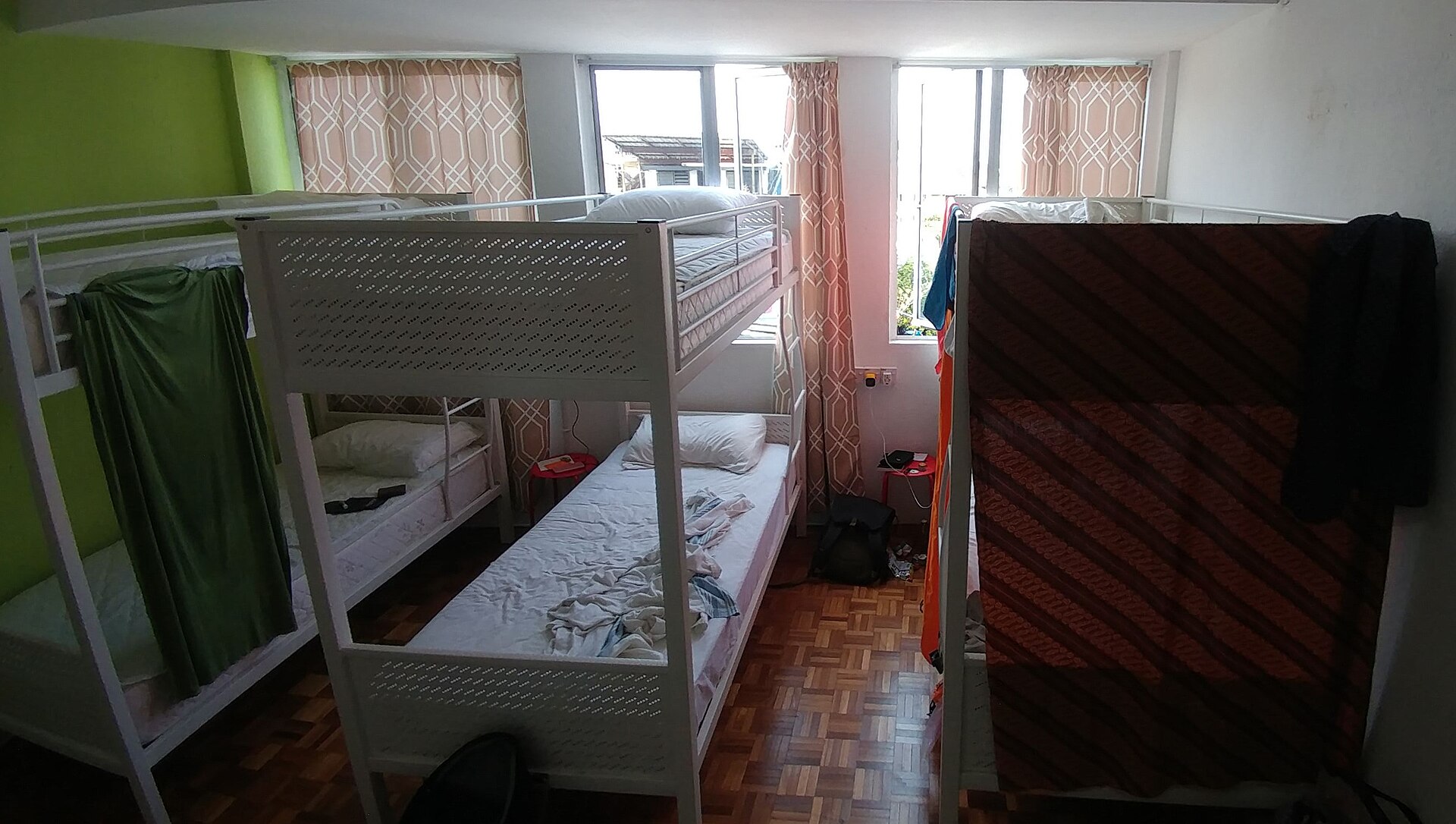
You pay less because you share a dorm, a kitchen and often a bathroom, and you get a built-in community in return. The skill is knowing which savings are harmless and which will cost you sleep or time.
What does a cheap youth hostel actually give you?
A hostel is low-cost, short-term shared lodging where you rent a bed rather than a room. The usual format is a bunk bed in a dormitory, and dorms can sleep anywhere from 4 to 20 people. On top of the bed you get shared use of a lounge and, in most cases, a kitchen. Private rooms exist too, and rooms can be mixed or single-sex, with private or shared bathrooms.
Extras vary from place to place. Some hostels sell food and drinks, offer laundry, hold your luggage, or provide lockers. Others skip most of that. When you compare two cheap options, do not compare the nightly rate alone. Compare what each one includes, because a slightly pricier bed with a kitchen and a locker can cost you less over a few days than a bare-bones one.
The name can mislead you. Despite the phrase youth hostel, most hostels do not impose age limits.
Why are hostels cheaper, and what do you give up?
The savings come from sharing space. You split the bedroom, the lounge and the kitchen with other guests, which keeps costs down and also makes it easier to meet people. Hostels are often more centrally located than rental apartments, which can save you transport money as well.
The trade-off is privacy. Sharing a dorm and bathrooms is not comfortable for everyone, and you should decide honestly whether it suits you before chasing the lowest price. Sleep is the other cost. Noise can make nights difficult, whether from snoring, talking, a lit-up lounge, or someone coming back late or leaving early.
- Earplugs and an eye mask are the standard fix, and they cost very little.
- Private rooms remove most of the noise problem if you can stretch the budget for a night or two.
Some hostels also run a curfew or a daytime lockout. These rules are more common in the cheapest places, so check them before you commit if you plan to arrive late or sleep in.
How do you check that a cheap bed is good value?
Start with the booking page, but read it as a checklist rather than a brochure. Look for these points before you pay:
- Whether the kitchen is fully equipped and whether there is fridge space.
- Whether lockers are provided and whether you must bring your own padlock.
- Whether any curfew or daytime lockout applies.
- Whether the dorm is mixed or single-sex, and how many beds it holds.
- Whether breakfast or other meals are included.
Then look at location. A bed on the edge of town can be noticeably cheaper than one in the middle, but the saving shrinks if you spend it on daily transit and lose time commuting. Weigh the two together rather than chasing the lowest number.
Finally, read recent guest comments for patterns, not single complaints. One grumble about a loud night means little. Repeated mentions of the same problem, such as a dirty kitchen or thin walls, tell you something real.
How can you use the kitchen and community to spend even less?
Food is where a hostel can save you the most beyond the bed. Nearly all hostels have a shared kitchen with a storage area and refrigerators, so cooking your own meals can replace a lot of restaurant spending. Even a place that sells affordable food and drinks on site is best treated as an occasional treat rather than your daily plan.
Most hostels use a label system so everyone knows whose food is whose. Label everything with your name and the date you plan to leave. Some places also have a marked free shelf where guests leave unwanted food, which is a fair way to pick up staples. Be realistic, though: theft of food can happen, so keep anything valuable in a bag you can carry or lock away.
Community helps your budget too. Many hostels organise social gatherings such as movie nights or shared dinners, and others run local tours, cooking classes or pub crawls. Some activities are free or cheap, and talking with other guests is a good way to find out about low-cost things to do nearby.
Can you get a bed for even less by working?
Some hostels offer long-term lodging for free or at a discount in exchange for work, typically as a receptionist or in housekeeping. If you are staying for weeks rather than days, this can cut your accommodation cost dramatically and give you a routine in a new place.
Treat it as a real job, not a free holiday. Ask in advance how many hours are expected, what you receive in return, and whether you will still have time to explore. Agree the terms clearly with the hostel before you arrive, and keep a fallback booking for your first night in case the arrangement does not work out.
This route suits people who are flexible, comfortable with shared living and happy to stay put for a while. If you only have a long weekend, a standard dorm bed is the simpler choice.
Which type of cheap hostel fits you?
Hostels differ in personality, and the right match matters as much as the price. Some focus on in-house events, some on tours and classes, some on parties, and some on being quiet places to relax, occasionally by the beach. Others position themselves as environmentally friendly ecohostels.
As a rough guide, think about what you want from the evening. If you want to meet people, pick a place with an active common area or bar and accept that it will be louder. If you want rest, choose a quieter property, and be ready to pay a bit more or travel a bit further out. Hostels in the central, social part of a city tend to be livelier, while a more residential spot a short transit ride away is usually calmer and cheaper.
Be honest about your own habits. If you are a light sleeper, a party hostel with a bargain rate is a false economy. If you are travelling solo and hoping to make friends, a silent budget bed may leave you lonely. Match the hostel to the trip, then use price to choose between the options that fit.
Frequently asked questions
Is a youth hostel only for young people?
No. Most hostels do not impose age limits, even though the typical guest is between 16 and 34. Many also offer private rooms for travellers who want more quiet.
What is the cheapest kind of bed in a hostel?
A bunk in a large shared dormitory is usually the lowest-priced option, and dorms can sleep from 4 to 20 people. Smaller dorms and private rooms generally cost more but give you more quiet and privacy.
How do I sleep well in a cheap dorm?
Earplugs and an eye mask are the usual answer to snoring, late arrivals and lit-up rooms. Choosing a smaller dorm or a quieter hostel helps further.
Can I stay cheaply for a long time?
Some hostels give free or discounted long-term lodging in exchange for work, such as reception or housekeeping. Agree the hours and terms clearly before you arrive.
Related reading
- 7 Hostel Travel Hacks Every Backpacker Should Know
- How to Choose a Hostel Dorm Bed: Position, Noise and Actually Sleeping
Sources
- Hostel — Wikipédia (en.wikipedia.org, accessed 2026-11-14)
Photo: Hostel 6-bed dorm room, Kuching, Malaysia, by Sgroey, CC BY 4.0 (Wikimedia Commons)